

Winship breast surgeon Clara Farley, MD and physician assistant McKenzie Webster
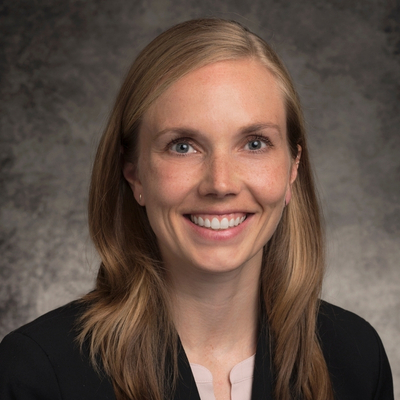
Clara Farley, MD
A surgeon at Winship Cancer Institute of Emory University has performed Georgia’s first robotic nipple-sparing mastectomy outside a clinical trial, bringing a new minimally invasive surgical option to select patients with breast cancer.
Clara Farley, MD, a breast surgical oncologist at Winship, performed the procedure at Emory Saint Joseph’s Hospital. Farley previously served as Emory’s site principal investigator for the national clinical trial evaluating the robotic surgical approach.
“This is an exciting new frontier in breast surgery,” says Farley, who is also a researcher in Winship’s Cancer Prevention and Control Research Program and assistant professor in the Department of Surgery at Emory University School of Medicine.
A different approach to nipple-sparing surgery
Nipple-sparing mastectomy removes breast tissue while preserving the nipple, areola and much of the natural breast skin. Compared with a traditional mastectomy, the procedure can support a more natural-looking result after reconstruction and offer potential benefits for body image and quality of life.
Winship surgeons already perform nipple-sparing mastectomies using a conventional open approach. Robotic nipple-sparing mastectomy accomplishes the same primary surgical goal but changes how the surgeon accesses and removes the breast tissue.
During conventional nipple-sparing surgery, the surgeon removes breast tissue through an incision made on or beneath the breast. The robotic approach allows the surgeon to perform the operation through a smaller, more discreetly placed incision, often along the outer breast or near the underarm.
Using a magnified, three-dimensional view and flexible robotic instruments, the surgeon can work precisely within the confined space between the breast tissue and overlying skin. The technology is designed to improve surgical access and visualization while allowing gentler handling of the breast skin and nipple areolar complex.
“The robotic platform allows us to work through a small, strategically placed incision with enhanced visualization in a confined space,” Farley says. “For appropriately selected patients, this approach may offer meaningful advantages in sensation, appearance and reconstruction while preserving the nipple-areolar complex and much of the natural breast skin.”
Potential benefits include less visible scarring, better preservation of skin sensation, and cosmetic and reconstructive advantages, although additional research is needed to evaluate these potential benefits over time.
Building on Emory’s research experience
The robotic surgical approach was recently cleared by the U.S. Food and Drug Administration for use in nipple-sparing mastectomy. Emory participated in the national clinical trial evaluating the procedure before that clearance, with Farley serving as the site's principal investigator.
Farley is currently the only surgeon in Georgia performing robotic nipple-sparing mastectomy and one of only 25 surgeons nationwide selected for the initial rollout. The procedure is available at Emory Saint Joseph’s Hospital and is being introduced gradually around the US as this initial group of specially trained breast surgeons gains experience with the approach.
Currently, this surgery is appropriate for only a select group of patients. Candidates are evaluated based on factors including breast anatomy, tumor location, and reconstruction plans. Eligibility is not determined by one particular breast cancer stage or subtype. At Winship, each patient with breast cancer is evaluated by a multidisciplinary team, including abreast medical oncologist, breast surgical oncologist and often a radiation oncologist, to determine the comprehensive treatment plan that is best for their overall health and quality of life.
While FDA clearance represents an important step forward, robotic nipple-sparing mastectomy remains an evolving area of breast surgical oncology. Additional research is needed to evaluate long-term cancer outcomes, sensation preservation, complication rates, operative efficiency and reconstructive results.
“Bringing robotic nipple-sparing mastectomy to Georgia reflects Winship’s commitment to carefully evaluating surgical innovations and responsibly translating promising advances into meaningful options for patients,” says Tari A. King, MD, chief surgical officer for the cancer service line at Winship and Emory Healthcare, and chief of the Division of Breast Surgery in the Department of Surgery at Emory University School of Medicine. “Farley’s leadership in the national clinical trial provides an important foundation as we introduce this approach and continue evaluating which patients are most likely to benefit.”
The new option expands Winship’s established expertise in nipple-sparing mastectomy and breast reconstruction while advancing a more minimally invasive approach to breast cancer surgery.