
Sonal Oza, MD Where Science Becomes Hope® Spotlight
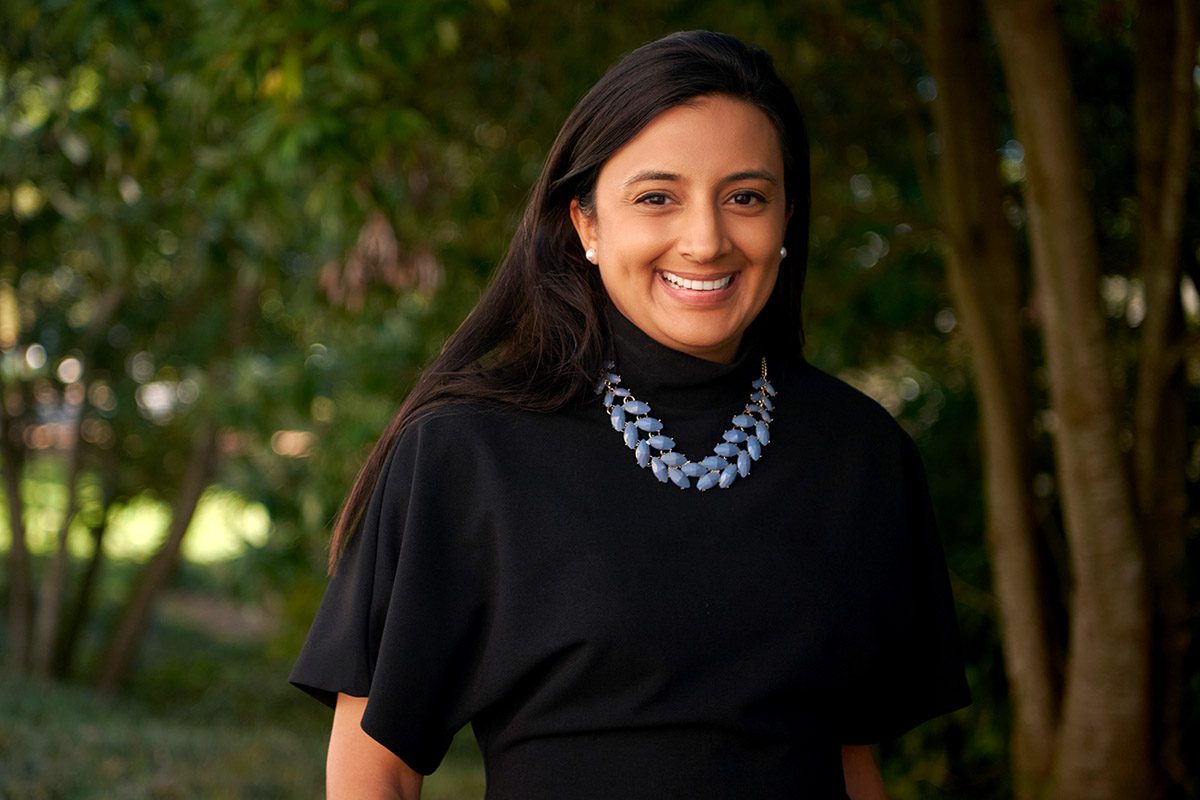
Our main goal is centered at what’s important to the patient, what their physical and functional goals are, and based on that we come up with a pretty personalized rehab plan.
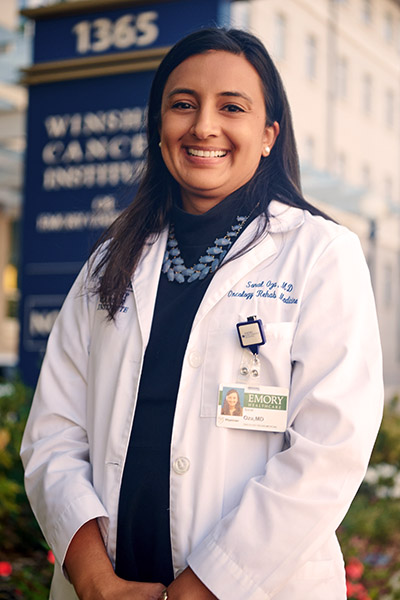
Sonal Oza, MD
Sonal Oza, MD, was still in medical school when she took note of how often oncology patients commented on how, physically, they weren’t the same individual anymore. Simple tasks, such as getting up to go to the bathroom, felt like it taxed their energy. Or they weren’t able to return to work or do the things they enjoyed. “I saw that there was this gap in that aspect of their survivorship care that really focused on their physical abilities, their physical function,” she says.
Around that time, Oza says cancer rehabilitation was “growing exponentially within rehab medicine.” She realized she could marry her two interests by applying rehab techniques to oncology “to really help improve patients’ function, their physical ability to get back to day-to-day life.”
Today Oza is an oncology rehabilitation physician at Winship Cancer Institute of Emory University and an assistant professor in the Department of Rehabilitation Medicine at Emory University School of Medicine. “As I was looking for an opportunity,” she says, “I was particularly impressed by the collaborative nature of the survivorship and integrative oncology team here” with its different subspecialists—including oncology rehab, supportive oncology or palliative care, pain medicine, acupuncture specialists, integrative oncology specialists. “They worked closely alongside each other. They talked about patients with each other. They had ongoing projects. And I thought that was something really unique to Winship, and wanted to be a part of and join that team.”
Oza explains that, as an oncology rehab physician, “our main goal is centered at what’s important to the patient, what their physical and functional goals are, and based on that we come up with a pretty personalized rehab plan.” This means working closely with physical therapy colleagues, prescribing medications or injections targeting the muscles, joints or nerves that may be the sources of the patient’s limitations, even getting “a little bit creative in helping patients improve their mobility and balance.” This might involve prescribing mobility devices such as walkers, canes or braces—or even prescribing a customized wheelchair.
Once the rehab physician diagnoses the source of the problem, they can prescribe physical therapy or other therapies based on what they and the patient agree they want to focus on.
Oza says the “classic core members of a rehab team” include a rehabilitation physician—often called a physiatrist—a physical therapist, an occupational therapist and a speech therapist or a speech-language pathologist. “So what we do is really broad, which can sometimes make rehab seem kind of abstract. But if it’s any sort of physical symptom that’s impacting one’s day-to-day or ability to return to their prior level of function, oftentimes we can help.”
Oza describes a growing area within cancer care and rehab called “prehab,” the idea that helping patients to “get kind of fit for upcoming surgery or radiation. “The evidence has shown that patients who tend to have a higher level of strength, who tend to be more mobile, can walk longer distances, we think in general they tolerate their treatment better and may even respond to treatment better.”
Oza says she often tells patients that no symptom or physical limitation is “too small” to bring up with your cancer team. “Your cancer team wants to know what’s going on, and we have the resources and services here to evaluate those symptoms, those functional limitations, and really help patients get back to living the life that’s meaningful to them. That’s the purpose of all of this.”
For Oza, “Where Science Becomes Hope” is about bringing the humanistic element to cancer care. “Science is about the data and all the numbers. But all of that serves a greater purpose of caring for the whole patient, improving their quality of life. I think that’s the hope in it, that all of these things that our patients are enduring are so they can spend time with their family, go to work, travel and have that quality and enjoyment in life. I think that’s where science becomes hope.”
Who have you observed inspiring hope in our patients, our team or our community? We would love to hear from you. If you have a story to share about someone inspiring hope at Winship, reach out to us using this form.